
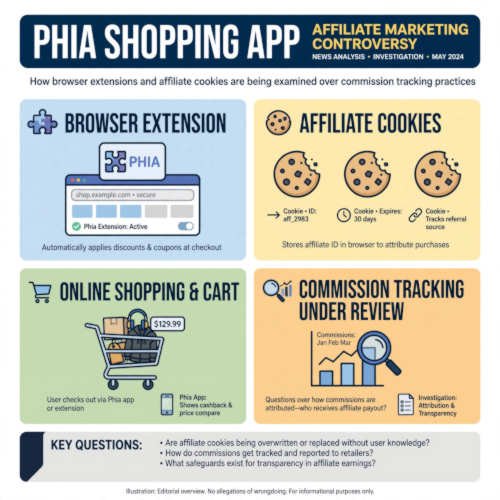

The tech world was rocked when Bloomberg revealed that Phia, a high-profile shopping browser extension co-founded by Phoebe Gates—daughter of Microsoft billionaire Bill Gates—and Stanford alum Sophia Kianni, was caught in an extensive cookie stuffing wire fraud investigation. Promoted as an AI-powered discount assistant that raised $30 million from celebrity investors like Hailey Bieber and Kris Jenner, the browser app is accused of systematically hijacking referral links across major online retailers. Digital forensics revealed that Phia automatically injected its own affiliate tracking codes into customer checkouts without user consent, quietly siphoning millions in unearned commission from creators and digital publishers.
The Anatomy of Affiliate Marketing Fraud: How Phia’s System Works Behind the Scenes
Cookie stuffing is an illicit web practice where a software application covertly drops tracking cookies onto a user’s web browser without their explicit knowledge or interaction. When a user purchases an item online, the merchant’s affiliate network reads the planted cookie and misallocates the sales commission to the perpetrator rather than the legitimate referrer. Independent testing by cybersecurity researchers and corporate competitors like Capital One Shopping uncovered that Phia’s iOS app and Chrome extension executed invisible background tabs during checkout. This process automatically overwrote existing referral tags from outlets like Wirecutter and Kutoku across major retailers including Nike, Gap, and Nordstrom.
| Key Metrics & Case Details | Findings & Industry Data Points |
| Startup Co-Founders | Phoebe Gates & Sophia Kianni (Stanford University Alums) |
| Venture Capital Raised | $30+ Million (Investors include Hailey Bieber, Kris Jenner, Sara Blakely) |
| Daily Revenue Before Fix | ~$80,000 per day in claimed commissions |
| Daily Revenue Post-Fix | $10,000 to $28,000 per day (Over 65% drop) |
| Improper GMV Attribution | ~51% of June merchandise value came from auto-dropped cookies |
| Primary Legal Risk | Federal Wire Fraud (18 U.S.C. § 1343) carrying up to 20 years prison |
Legal Penalties and Federal Wire Fraud Risks in Digital Commerce
Prominent legal analysts note that cookie stuffing in interstate commerce violates federal law, primarily qualifying as wire fraud under United States federal statutes. Attorneys at Givner Law highlighted that knowingly deploying code to falsely claim monetary credit across state lines carries serious criminal exposure, including up to 20 years in federal prison, substantial civil restitution, and corporate asset forfeiture. Internal Slack messages leaked during the investigation showed that co-founders discussed automated coupon pop-up drops as early as December, contradicting early public statements framing the event as a sudden software glitch. Major affiliate networks such as Impact.com and Skimlinks have since suspended Phia, withholding pending payouts to compensate affected brand partners.
Financial Fallout, Compliance Enforcement, and Brand Partner Reactions
When Phia disabled its unauthorized auto-drop features on July 7, its daily revenue plummeted by more than 70%, proving how heavily its business model relied on misattributed sales. Retail partners and affiliate network managers are actively calculating financial damages to demand full clawbacks of improperly paid commissions. In response to growing backlash, Phia hired a head of compliance, initiated transaction reversals, and launched an internal audit to restore trust among merchants. However, the controversy serves as a stark warning to Silicon Valley founders that ethical code compliance and transparent tracking mechanisms are non-negotiable standards in global e-commerce.
Frequently Asked Questions (FAQs)
What is cookie stuffing in affiliate marketing?
Cookie stuffing occurs when a script or browser extension forcibly injects an affiliate tracking cookie onto a user’s browser without the user intentionally clicking an affiliate link. This tricks online retailers into paying sales commissions to entities that did not drive the customer’s purchase decision.
What criminal penalties can founders face for affiliate fraud?
In the United States, affiliate marketing fraud involving deceptive software scripts is commonly prosecuted as federal wire fraud. Defendants convicted under federal wire fraud statutes face severe consequences, including up to 20 years in federal prison, monetary fines, and mandatory financial restitution to victims.
How can online shoppers protect themselves from browser extension hijacking?
Consumers can audit their installed browser extensions regularly, remove unverified shopping assistants, and clear browser cookies before checking out. Utilizing privacy-focused browsers or ad blockers that block unauthorized background tabs also prevents third-party code from altering tracking parameters at checkout.
Compliance Takeaways and Modern E-Commerce Governance
Digital commerce relies entirely on transparency, accurate attribution, and strict technical compliance across advertiser networks. As regulatory bodies and cybersecurity experts increase scrutiny on browser extensions, founders must prioritize rigorous internal auditing over aggressive growth hacks. Retail partners, content creators, and publishers can reference detailed legal summaries on Wikipedia’s Cybercrime Documentation, explore community discussions on NT Live News Forums, or search for corporate compliance guidelines via USA Free Latest Job Alert Search to remain fully informed on industry standards and fraud prevention. Building a sustainable startup requires upholding user trust, ensuring operational transparency, and maintaining absolute legal integrity in every line of deployed code.
To better understand the technical mechanisms behind this investigation, watch the detailed report on Phoebe Gates’ Retail App Scrutiny. This video provides critical context regarding how browser extensions overwrite affiliate tracking cookies and the legal implications facing startup founders.