
NY News Updates: Wanting to know about American student loan relief? In the latest u.s news, we have A major court ruling that has cleared the way for additional student loan debt relief for borrowers who say they were misled or defrauded by their colleges.
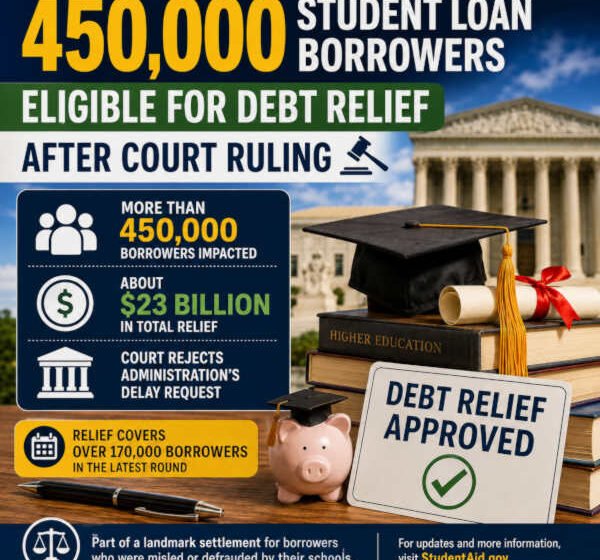
More than 170,000 federal student loan borrowers are now entitled to relief after a federal appeals court rejected the U.S. Department of Education’s latest attempt to delay deadlines under a long-running class-action settlement.
The decision is part of the Sweet v. McMahon case, formerly known as Sweet v. Cardona and Sweet v. DeVos. The lawsuit has stretched across three presidential administrations and has become one of the largest student loan relief cases in U.S. history.
The broader settlement is now valued at approximately $23 billion and affects roughly 450,000 borrowers. (Project on Predatory Student Lending)
For borrowers who have spent years waiting for answers, the ruling could finally bring the thing they have been asking for all along: a decision on their debt.
What Did the Court Decide?
On July 17, 2026, a three-judge panel of the U.S. Court of Appeals for the Ninth Circuit rejected the Education Department’s effort to obtain additional time to process certain borrower-defence applications.
The department had sought an additional 18 months to review claims that remained unresolved.
The court’s decision left in place deadlines established under the 2022 settlement and confirmed that borrowers whose applications were not decided by the applicable deadlines are entitled to the settlement’s promised relief. (Project on Predatory Student Lending)
The ruling matters because the government had already agreed to deadlines when the settlement was approved.
The appeals court found that the department had known for years about the number of affected applications and did not object to the settlement requirements until much later. (MySanAntonio)
In other words, the clock had been ticking for quite some time.
Why Are These Borrowers Receiving Relief?
The case centres on the federal Borrower Defence to Repayment program.
This program allows eligible federal student loan borrowers to seek cancellation of their loans when a school engaged in misconduct that misled students or otherwise caused them financial harm.
The allegations in the lawsuit involved claims that some schools made misleading statements about issues such as graduation rates, employment opportunities, transferability of credits and expected earnings.
Borrowers argued that the Education Department had failed to process their applications properly and had left many people waiting for years.
The lawsuit was filed in 2019 by borrowers represented by the Project on Predatory Student Lending, or PPSL. (Project on Predatory Student Lending)
The case eventually produced a settlement in 2022.
Under that agreement, the Education Department agreed to provide immediate loan cancellation for approximately 200,000 borrowers who attended schools identified as having strong indicators of substantial misconduct.
The settlement also established deadlines for resolving other borrower-defence applications.
When those deadlines were missed, the settlement provided for full relief for qualifying borrowers.
More Than 170,000 Borrowers Are in the Latest Round
The newest court ruling triggered relief for more than 170,000 additional borrowers.
The newly affected borrowers are largely part of a group known as the Post-Class applicants.
These borrowers submitted borrower-defence applications after the original class period but before the relevant deadline established by the settlement.
PPSL says the settlement established decision deadlines for borrowers who applied between June 23, 2022, and November 16, 2022. If the Education Department failed to issue decisions by the applicable deadlines, those borrowers became entitled to full settlement relief. (Project on Predatory Student Lending)
That is why the latest ruling is so significant.
It does not simply tell the Education Department to work faster. It reinforces the consequences already established by the settlement when the government missed the required deadlines.
The Bigger Number: About 450,000 Borrowers
The headline figure of 450,000 borrowers can be confusing because the latest court ruling does not mean that all 450,000 people suddenly received debt cancellation on the same day.
Instead, the figure represents the broader population affected by the settlement and its various rounds of relief.
PPSL says the settlement has now reached approximately $23 billion in total relief and has affected hundreds of thousands of borrowers. (Project on Predatory Student Lending)
The latest ruling adds more than 170,000 borrowers to the group entitled to relief.
That distinction is important for borrowers reading headlines online. A person should not assume that seeing “450,000 borrowers” automatically means they personally qualify.
Eligibility depends on the borrower’s application, school, timing and status under the settlement.
Who May Qualify?
The settlement focuses on federal student loan borrowers who filed borrower-defence claims connected to alleged misconduct by their schools.
The original class generally covered individuals who had borrower-defence applications pending as of June 22, 2022.
The settlement also created protections for certain borrowers who submitted applications during the subsequent Post-Class period.
According to PPSL, Post-Class applicants include borrowers who submitted borrower-defence applications between June 23 and November 16, 2022. (Project on Predatory Student Lending)
The specific relief available can depend on which category a borrower falls into and whether the applicable deadline was missed.
Borrowers should therefore rely on their individual Department of Education records and official settlement information rather than social media posts or generalised lists.
What Types of Schools Are Involved?
The case has focused heavily on allegations involving for-profit colleges.
Some of the institutions discussed in connection with the litigation include ITT Technical Institute, Corinthian Colleges, DeVry University and the Art Institutes.
The lawsuit alleged that students at various schools were encouraged to enrol based on misleading representations about educational and career outcomes.
The allegations were not identical for every school or borrower.
That is why eligibility cannot simply be determined by saying someone attended a for-profit college.
The settlement and borrower-defence process involve specific requirements and categories.
What Happens to Eligible Loans?
For borrowers entitled to full settlement relief, the process can include discharge of qualifying federal student loan debt.
The settlement can also provide additional relief connected to payments and credit reporting, depending on the borrower’s circumstances.
The Education Department has previously been required to provide borrowers with information about their status and applicable relief.
PPSL says Post-Class borrowers entitled to full settlement relief are to receive that relief within the applicable settlement timeline, with June 15, 2027, identified as the deadline for the remaining relief covered by the relevant orders. (MySanAntonio)
That means borrowers should not necessarily expect every account to show a zero balance immediately after the court ruling.
Loan servicing systems can take time to reflect a discharge.
Do Borrowers Need to Apply Again?
For people already covered by the settlement, the latest ruling does not mean they need to start the entire process over again.
The settlement concerns borrowers who already submitted qualifying borrower-defence applications.
PPSL has said that borrowers whose applications were not decided by the applicable deadlines are entitled to the relief required by the settlement. (Project on Predatory Student Lending)
Borrowers should nevertheless monitor official communications and their federal student aid records.
Anyone who receives an unexpected request for personal information or payment should be cautious. Legitimate federal student loan assistance should not require borrowers to pay a stranger to “unlock” forgiveness.
Why Has the Case Taken So Long?
The lawsuit began in 2019 after borrowers accused the Education Department of failing to properly process this applications.
The litigation continued through the administrations of Donald Trump, Joe Biden and the current Trump administration.
A settlement was reached in 2022, but implementation did not end the legal dispute.
The Education Department repeatedly sought additional time or changes to deadlines, while other parties also challenged aspects of the settlement.
According to PPSL, courts at multiple levels rejected efforts to delay or overturn the settlement. The Ninth Circuit’s July 17 ruling was the latest major development. (Project on Predatory Student Lending)
For borrowers, the years-long legal battle has been more than a courtroom story.
It has meant uncertainty over whether debts would remain on their accounts, whether payments would continue and whether their claims would ever be resolved.
What Should Borrowers Do Now?
Borrowers who believe they are part of the settlement should keep an eye on their official federal student loan records and communications from the Education Department.
They should also keep copies of their original application, confirmation emails and other relevant documents.
Borrowers should not assume that a general headline means their loans have already been discharged.
The safest approach is to verify individual eligibility through official federal student aid channels and settlement information.
PPSL also provides information about the Sweet v. McMahon settlement and its latest developments. (Project on Predatory Student Lending)
A Major Victory for Borrowers
The Ninth Circuit ruling represents a major development in a case that has lasted seven years.
For more than 170,000 borrowers in the latest group, the decision removes a significant obstacle to receiving the relief promised under the settlement.
For the broader group of approximately 450,000 borrowers, the case represents about $23 billion in student debt relief.
The numbers are enormous, but behind every number is an individual borrower who may have spent years making payments on a degree they believe did not deliver what their school promised.
The court’s ruling does not erase every student loan problem in America. It also does not mean every borrower with federal student debt qualifies for cancellation.
But for people covered by the Sweet v. McMahon settlement, the latest decision brings the long-running legal fight closer to its final chapter.
After years of waiting, that may be the most important part of the story.
The article above keeps the 170,000 newly affected borrowers separate from the roughly 450,000 borrowers covered by the broader $23 billion settlement, which is important for accuracy and SEO. (Project on Predatory Student Lending)