
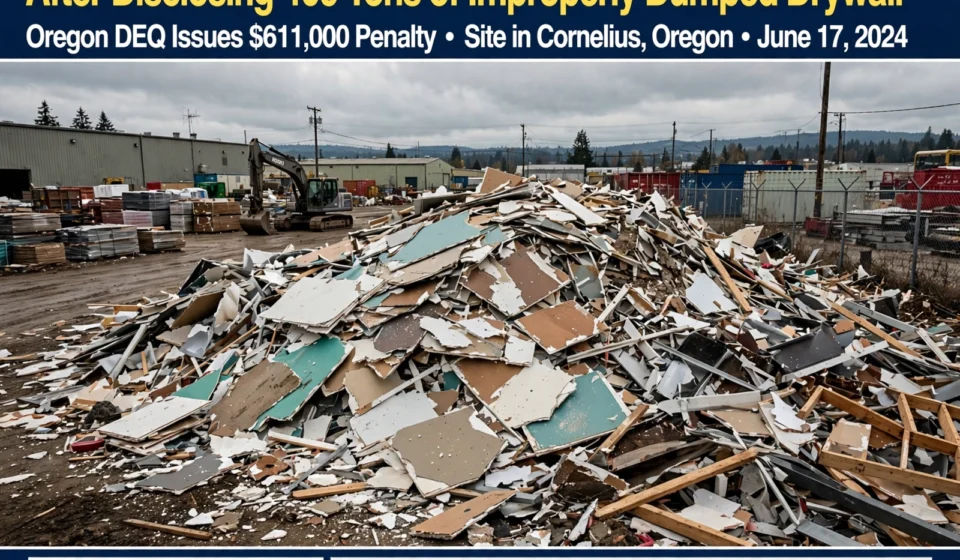

PORTLAND, Ore. A prominent Pacific Northwest waste hauling and recycling contractor is under intense regulatory scrutiny following the disclosure that hundreds of tons of construction material intended for recycling were instead routinely routed directly to local landfills.
City of Roses Disposal & Recycling, a major waste management operator holding millions of dollars in regional government contracts, received a formal notice of violation from regional regulator Metro after self-reporting that it misreported and improperly landfilled 409 tons of drywall demolition waste over a three-year span.
The disclosure marks the second significant compliance breach for the Portland-based firm in less than a year, coming on the heels of a late-2025 violation involving the improper disposal of 17 tons of recyclable plastic collected from the Oregon Convention Centre.
Breakdown of the Violation: How 409 Tons Ended Up in the Landfill
According to regulatory filings and official communications disclosed by the Metro regional government, the City of Roses acknowledged that drywall demolition debris collected from construction sites was hauled to municipal dumps rather than processed through specialised material recovery facilities.
Timeline of Discarded Material
The misreported drywall shipments occurred across three distinct calendar windows between 2022 and 2025:
-
Period 1: Late April 2022 through early July 2022
-
Period 2: Mid-February 2023 through mid-June 2023
-
Period 3: Late October 2024 through April 2025
During these intervals, the company recorded the incoming debris as recycled material in its official reporting to Metro. Under Metro’s municipal solid waste operating codes, pre-sorted recyclable goods cannot be redirected to a landfill without explicit prior authorisation from regional authorities.
“If something is too contaminated to recycle, haulers are required to inform us and seek formal regulatory permission before landfilled disposal,” noted Metro spokesperson Nick Christensen.
Contamination, Market Realities, and Construction Debris Challenges
In a formal letter sent to Metro leadership, City of Roses Chief Executive Officer Alando Simpson emphasized that the drywall in question consisted of demolition debris contaminated with nails, paint, wallpaper, and structural adhesives.
                     CONSTRUCTION DRYWALL RECYCLING COMPARISON
┌──────────────────────────────┬──────────────────────────────┬──────────────────────────────┐
│ Material Type                │ Recyclability Status         │ Primary End Uses             │
├──────────────────────────────┼──────────────────────────────┼──────────────────────────────┤
│ New Construction Cutoffs     │ Highly Recyclable            │ Wallboard manufacturing,     │
│ (Clean Gypsum Scrap)         │                              │ soil amendment, cement      │
├──────────────────────────────┼──────────────────────────────┼──────────────────────────────┤
│ Demolition Drywall           │ Non-Recyclable / Rejected    │ Landfill disposal or         │
│ (Painted, Nailed, Papered)   │                              │ hazardous treatment          │
└──────────────────────────────┴──────────────────────────────┴──────────────────────────────┘
According to industry experts, the commercial recycling infrastructure for gypsum wallboard remains heavily restricted to unadulterated post-industrial scrap.
“Drywall that has been painted or wallpapered is generally not accepted by commercial processors,” explained Andrea Johnson, Executive Director of the Construction & Demolition Recycling Association (CDRA). “It is clean scrap generated during new construction framing that is actively sought after for agricultural and industrial recovery.”
Company representatives asserted that regional drywall recycling vendors previously accepted mixed loads but tightened their acceptance standards due to downstream processor specifications. As regional recovery facilities turned away contaminated hauliers, the City of Roses routed the loads to disposal sites without updating its data logs or notifying Metro regulators in advance.
Operational Compliance and Internal Auditing Overhauls
The drywall reporting discrepancy came to light only after the City of Roses initiated a comprehensive internal compliance audit mandated by Metro following earlier violations.
In December 2025, Metro regulators issued a $10,690 civil penalty against the company after an investigation confirmed that 17 tons of plastic gathered under a $400,000 commercial waste service agreement with the Oregon Convention Centre had been dumped in a landfill between July 2024 and August 2025.
                     CITY OF ROSES REGULATORY TIMELINE
┌─────────────────────────┬──────────────────────────────────────────────────────────────────┐
│ Date                    │ Event / Enforcement Action                                       │
├─────────────────────────┼──────────────────────────────────────────────────────────────────┤
│ July 2024 – Aug 2025    │ 17 tons of Convention Center plastic landfilled without notice   │
│ December 2025           │ Metro issues Notice of Violation NOV-465-25 and $10,690 fine     │
│ February 2026           │ Company submits formal corrective plan and settles fine          │
│ May 2026                │ Internal audit reveals 409 tons of misreported drywall waste     │
│ July 2026               │ Metro issues new Notice of Violation for drywall reporting data  │
└─────────────────────────┴──────────────────────────────────────────────────────────────────┘
Following the initial enforcement action, City of Roses retained independent environmental consultants to overhaul its data logging, visual load estimation, and weigh-scale tracking protocols.
In an official public statement, Simpson maintained that the company is actively taking responsibility:
“Starting early this year, City of Roses invested significantly in company-wide operational compliance and conducted voluntary internal audits to identify past data anomalies and improve our data capture and reporting systems,” Simpson stated. “The issue was operational, not intentional, and we are not running from accountability.”
High-Stakes Public Contracts and Regional Oversight
The recurring compliance issues have raised broader questions among civic leaders and commercial waste customers across Multnomah County. City of Roses is a prominent minority-owned business enterprise (MBE) holding roughly $5.5 million in public service contracts across major regional venues, including:
-
The Oregon Zoo
-
Oxbow Regional Park
-
Portland Centers for the Performing Arts
-
Oregon Convention Center
While Metro staff initially recommended limiting the company’s solid waste facility franchise to a one-year probationary renewal in late 2025, the elected Metro Council ultimately voted to approve a standard five-year franchise extension through December 2030, while tacking on strict mandatory compliance reporting and mandatory third-party audits.
Broader Implications for Commercial Waste Management and Corporate ESG
The enforcement actions in Portland underscore the growing legal and financial risks associated with corporate sustainability reporting and landfill diversion mandates.
As local governments implement stringent zero-waste targets and high green-building standards (such as LEED certification), commercial waste hauliers face intense pressure to balance operational costs with regulatory compliance.
Key Industry Takeaways
-
Verifiable Audit Trails: Environmental regulators are increasingly deploying forensic data audits to cross-reference scale tickets with downstream processor manifests.
-
Standardisation of Contaminated Load Protocols: Hauliers must establish clear operational boundaries when handling contaminated construction debris to avoid regulatory non-compliance.
-
Transparency in Market Realities: When end-markets for commodities like post-demolition gypsum or low-grade plastics collapse, hauliers must formally petition regulators for disposal waivers rather than quietly diverting loads.
Metro officials confirmed that their regulatory oversight team continues to review the City of Roses’ updated reporting metrics to ensure full adherence to regional environmental standards.