
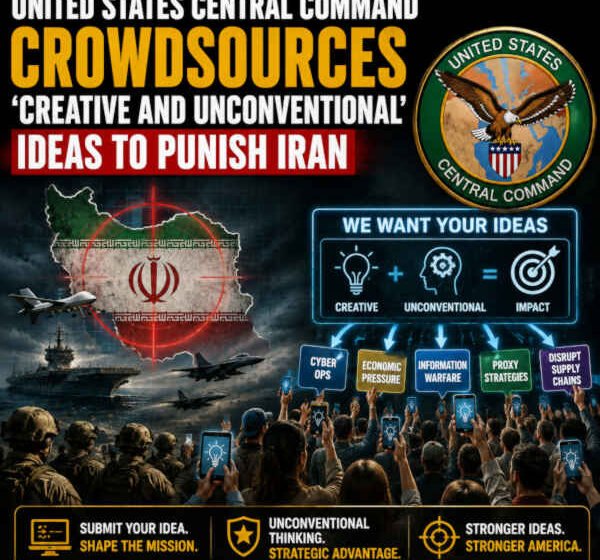

USA: Read all about the United States Central Command’s recent hot news alert. In an unusual move highlighting shrinking options in the war with Iran, the United States Central Command (CENTCOM) has turned directly to its own troops and analysts for fresh ideas. Faced with a persistent conflict and a narrowing set of conventional military pathways, senior leadership is crowdsourcing “creative and unconventional” tactics from service members across ranks.
According to a CNN report by Zachary Cohen on The Situation Room, an intelligence officer at United States Central Command distributed an internal email asking analysts to pitch novel ways to pressure and “punish” Tehran. The move signals a broader effort within the military to reevaluate its strategic playbook.
Running Low on Conventional Options
The widespread internal request comes as military intelligence agencies, including the CIA and Defense Intelligence Agency (DIA), assess that routine air strikes are failing to alter Iran’s stance or resolve conflicts over maritime security in the Strait of Hormuz.
Strategic Limitations Facing Military Planners:
 🪖 Ground Troop Risks    - Deep subterranean sites require ground forces, breaking foreign policy promises.
 💥 Air Campaign Limits   - Bombing campaigns have failed to force Tehran to negotiate on US terms.
 🚢 Maritime Vulnerability - Ongoing threats in the Strait of Hormuz disrupt global trade and shipping.
 📦 Dwindling Stockpiles  - High-intensity strikes are straining US air-defense interceptor supplies.
Joint Chiefs Chairman Gen. Dan Caine acknowledged this reality during congressional testimony, noting that “air power has its limits”. Deeper strikes against fortified underground sites like Pickaxe Mountain present severe operational challenges, as conventional munitions cannot reliably destroy deeply buried facilities without deploying American ground troops—an option President Donald Trump has avoided.
Breaking Military Hierarchy Norms
While feedback loops exist in military planning, soliciting tactical concepts via command-wide email regardless of rank is exceedingly rare during active combat operations. CENTCOM leadership defended the effort as an example of operational agility.
“United States Central Command has a long history of thinking and working in innovative ways. Admiral Cooper, in particular, reaches out to members of our great team, regardless of rank, to achieve the highest levels of operational performance possible.”
— Capt. Timothy Hawkins, CENTCOM Spokesperson
Strategic Dilemma and De-Escalation Pressures
The push for creative tactics follows a series of paused military actions. Planned strikes were recently called off following diplomatic outreach from regional partners, including Saudi Crown Prince Mohammed bin Salman, who urged de-escalation to prevent an all-out regional war.
As diplomatic channels in Oman attempt to broker a resolution, Washington faces a core dilemma: generating enough military leverage to secure a favorable deal without descending into an open-ended conflict. Until a strategic breakthrough occurs, United States Central Command is leaving no stone unturned in its search for new ideas.